The Pause Between Tasks: A Small History of the Work Break
The history of the work break traces how pauses gained recognition and explains why a scheduled interval only feels like rest when job demands genuinely recede.
When does a pause count as a work break rather than a moment spent waiting for the next task? The history of the work break is easiest to approach through that distinction: a meal away from a bench, a bell marking a shift change, or a brief interval after a rush of orders. These examples belong to different settings, and they do not establish a single, universal history.
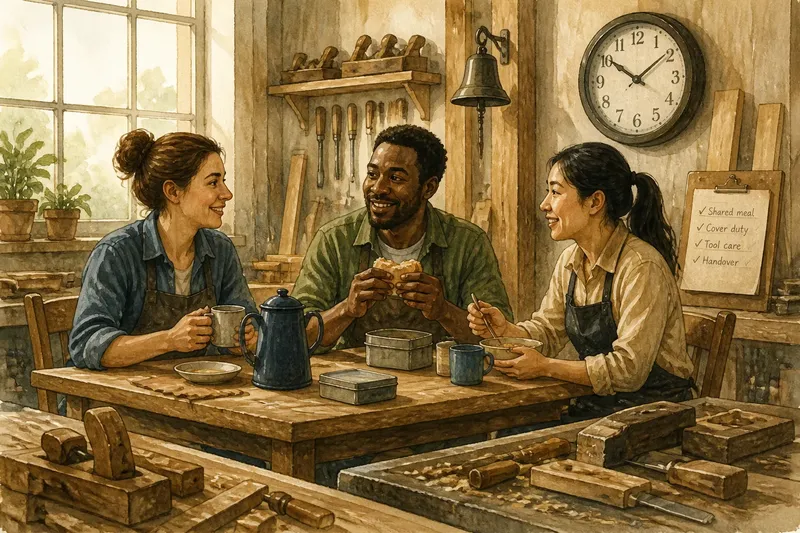
Imagine a fictional workshop where Mara begins the week with no agreed pause beyond eating when the work allows. By the end of this invented situation, the team has arranged a shared meal interval and assigned someone else to cover urgent enquiries. The change is modest: it clarifies when Mara is free from the bench and what happens while she is away.
What counted as a pause before a scheduled break?
In many kinds of work, an interval could arise from the task itself rather than from a set time for rest. A craft worker might sharpen a tool or fetch materials; a household worker might move from one kind of labour to another. Such moments could interrupt activity without being chosen or restorative.
That distinction remains useful. Waiting for a machine, watching a pot or standing by for instructions may leave someone responsible for the work. A break more clearly signals permission to step away, eat or stop responding for a while.
The available pause depended on the setting. In a small shop, work might ease between customers; in a larger workplace, a bell or supervisor could coordinate an interval for a group. Those arrangements suggest different forms of control, but they do not tell us how often either was used across workplaces or periods.
How did factory clocks shape the work break?
In factories where groups of workers and machines followed coordinated schedules, bells and clocks could mark when work began, stopped or changed over. That made a shared interval possible, but it also tied the timing of a break to the organisation of production.
There was no single factory pattern. The task, employer’s rules and pace of work affected whether a pause meant a meal, a short halt or time to change tools and stations. An interruption required by the job was not necessarily time away from its demands.
In Mara’s imagined workshop, she makes wooden fittings while a colleague handles finishing and another moves materials. When Mara clears shavings or replaces a worn blade, production pauses, but she remains occupied with the job. The team might call these moments “gaps”; that name does not make them rest.
When did the work break gain formal recognition?
Meal intervals and limits on working time have been addressed through workplace rules, labour regulation and negotiation in different places and periods. The details vary, so it is safer to describe formal recognition as an uneven process than as a single change shared by every occupation.
A written rule does not by itself make a pause usable. A worker may still be expected to answer questions or wait for cover, while an informal team custom may create a clearer opportunity to step away. The history is therefore not a simple progression from no rest to adequate rest; it also concerns who controls time and how duties are handed over.
In the invented workshop, the team tells the owner that its supposed gaps are taken up by maintenance and handovers. They agree to keep those duties separate from a shared meal interval. The observable result is a clearer boundary: the meal is no longer treated as time for tool care or passing on work.
Why does the work break differ between jobs?
Jobs have different rhythms and responsibilities. A person serving customers may find a lull but still need to respond; someone working remotely may have no bell or colleague to mark a transition. A care worker may need a handover before stepping away, while a maker may be able to stop safely between batches but not during a delicate operation.
A scheduled interval can still feel like work if the person remains on call. Cover from a colleague, a clear handover or an agreed point when messages can wait may create more distance from the task. What is practical depends on the role and the workplace.
Older images such as tea by a clock or a meal in a canteen describe familiar ways of marking a pause, not every worker’s experience. The useful questions are who can stop, which duties continue, and who carries them during the interval.
What questions clarify whether a pause is a break?
Were breaks always part of a formal working day?
No. Some pauses arose from the task, such as waiting for a process or preparing equipment, rather than from time set aside for rest. Formal schedules and workplace customs have varied by occupation and place.
Why did bells and clocks matter?
Where many people worked to a shared schedule, signals could coordinate starts, stops and changes of shift. They could mark a break while also giving the workplace control over when it happened.
Is waiting between tasks the same as taking a break?
Not necessarily. Someone waiting may still have to watch, respond or prepare to resume work. A break usually involves a clearer release from at least some immediate duties.
Does the history of breaks point to one ideal schedule?
No. The historical picture varies with the task, workplace arrangements and local rules. A suitable schedule depends on the job and, where relevant, applicable policy or regulation.
What changes when a work break is made visible?
In Mara’s fictional workshop, the team decides that one person will cover urgent enquiries while the others eat away from the benches, then rotate the cover duty. The expected observable result is specific: the meal is less likely to be interrupted by those enquiries, and the person covering them knows when that responsibility ends.
Tool care and handovers still need time, so the team gives them a place in the workday rather than counting them as rest. This distinction can help people see whether a pause is being used for recovery or for work that has not been scheduled elsewhere.
It is not worth making every pause ceremonial. A special room, elaborate ritual or minute-by-minute record can add administration without creating more distance from work. The more useful question is whether the person stepping away and the person providing cover both understand what happens next.
What does the history of the work break show?
Pauses have been shaped by tasks, shared schedules, workplace rules and the ability to negotiate time. These forms can overlap: a scheduled meal may be interrupted, while an informal lull may offer genuine distance from a job.
The history of the work break offers a practical question, not a universal prescription: what work continues during the interval, and who carries it? In Mara’s invented workshop, the answer becomes clearer when maintenance is separated from rest and cover has a defined end. A pause is easier to recognise when its boundary is understood by both the person leaving and the people keeping the work going.