Walk, Stretch or Dance: Choosing Movement for a Short Break
Choose movement for a short break by matching walking, stretching or dancing to your space, mood and preferred pace, without turning rest into a workout.
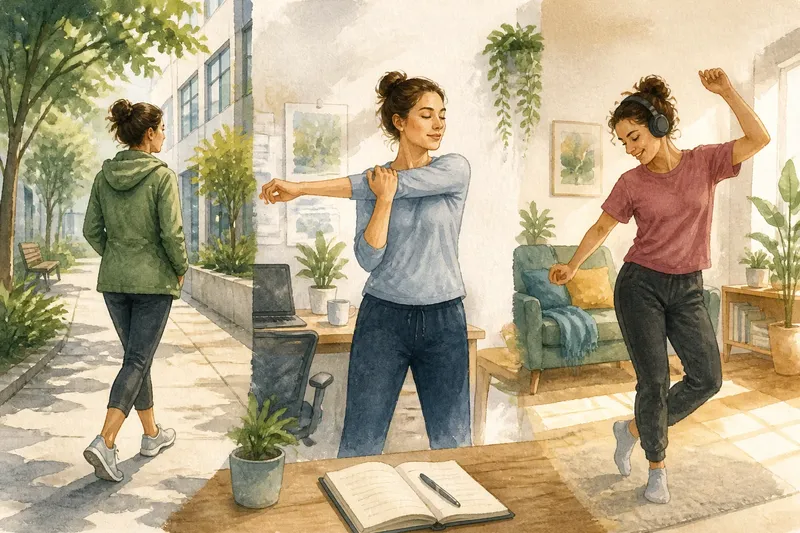
Choosing movement for a short break is easier when you start with the room you have, the mood you are in and the pace you want—not with the question of which activity burns the most energy. A walk, a stretch or a brief dance can each interrupt a long spell of sitting, but they ask for different things from your body and surroundings.
What do you want the break to change?
Before choosing, notice what feels most prominent. You may want a change of scenery, a little room through your shoulders and hips, or a lift in mood. These are different aims, and the best fit can change from one break to the next.
Think of the available interval as a boundary, not a target to fill. If you have little time or need to stay near a desk, movement can be brief and still feel distinct from the task you just paused. There is no need to turn a pause into a session or keep going once the break has served its purpose.
When does a walk suit the moment?
Walking is often the easiest choice when you want to leave the room or let your attention settle on something beyond a screen. A corridor, a courtyard or a familiar path around the building can provide a clear change of scene without equipment. If going outdoors would take longer than the break allows, even a few unhurried laps indoors can offer a change in posture and focus.
Choose a walk when your legs feel restless, your eyes need a distant view, or the next task would benefit from a calmer transition. Keep the pace conversational rather than trying to turn the break into exercise. If you are working somewhere that makes leaving awkward, walking may create more logistical friction than it is worth.
When is stretching the better choice?
Stretching works well when you want to stay where you are and give a particular area some attention. Gentle shoulder rolls, a standing chest opening or an easy calf stretch against a wall need little space and no change of clothes. The point is to explore comfortable movement, not to reach a more impressive position.
This option may suit someone who has been typing, drawing or sitting in one position and wants a quiet reset. Move slowly enough to notice how the stretch feels, and ease out if it becomes sharp or uncomfortable. A short stretch is less suitable if you feel impatient with stillness or would rather have music and momentum.
What does dancing add to a short break?
Dancing brings rhythm and choice into the pause. One song, or part of one, can be enough: sway, step from side to side, or move your arms in a way that feels natural. A clear patch of floor helps, but the movement does not need to resemble a class or choreography.
Try dancing when your mood feels flat and you want a more playful change than a stretch provides. It can also suit a private break at home, where you can choose the volume and move without worrying about disturbing others. In a shared office or a crowded room, the setting may make walking or stretching more comfortable.
How do you choose between walking, stretching and dancing?
Use three simple questions: how much space is available, what kind of mood are you in, and how much pace do you want? Match the answer rather than ranking the activities. Your choice can be different tomorrow, even if the break happens in the same place.
- Choose walking if you can move through a safe, accessible route and want a change of scene.
- Choose stretching if you need to stay close to your work and prefer a quiet, focused pause.
- Choose dancing if you have room to move and want rhythm or playfulness more than a change of location.
- Choose the gentlest option if you are tired, stiff or unsure what your body will welcome today.
Say you have a short gap between video calls, feel mentally restless and cannot leave the room. You might move a chair aside, play a familiar song at a considerate volume and step gently from side to side; the expected observable result is a brief shift from stillness to movement, without needing to change clothes or plan a workout. If someone else is on the call nearby, a quiet stretch may fit better.
It is not worth spending the whole break searching for the perfect track, route or sequence. Pick an option that is available now. The ease of beginning matters more here than finding a theoretically ideal activity.
Which movement questions come up most often?
Can I combine a walk and a stretch in one break?
Yes, if changing between them feels simple rather than rushed. A short walk followed by a comfortable shoulder or calf stretch can suit someone who wants both a change of scene and a pause before returning to a desk.
What if I have almost no floor space?
Choose small movements that do not require a clear patch of floor, such as gentle shoulder rolls or standing weight shifts. If you can move through a corridor without blocking anyone, a quiet walk is another option.
Should a short break feel energetic?
No. A break can be slow, light or playful; it does not need to raise your effort level to count as movement. Let comfort and the demands of your next task guide the pace.
What if none of the three options appeals?
Take the pause without forcing an activity, or choose the least demanding movement available, such as standing and shifting your weight. The purpose is to make a useful change in the day, not to prove consistency.
How can the choice stay flexible?
Keep the decision tied to the conditions you can see: room, mood and desired pace. A rainy day may make indoor stretching more appealing; a quiet afternoon may leave space for a walk; a song may make dancing feel inviting. These are prompts, not rules, and there is no need to preserve one fixed routine when circumstances change.
For a short break, walking offers a change of place, stretching offers focused ease, and dancing offers rhythm. Choosing movement for a short break becomes more practical when you treat those differences as useful options, then take the one that fits the interval in front of you. If a movement brings pain or a health concern, stop and seek advice from a qualified professional.